
Oxidized Bitumen for Textile Industry – Overview
Oxidized bitumen for textile industry applications is used wherever a fabric, felt or fibre mat must become waterproof, heavier, more stable or better at damping sound. Oxidized bitumen, also called blown bitumen or blown asphalt, is made by blowing air through hot penetration-grade bitumen. The result is a binder with a higher softening point, lower temperature sensitivity and a more rubber-like consistency than road bitumen.
When it is applied hot to a textile base, oxidized bitumen soaks into the fibres or forms a continuous layer on the surface. Once it cools, it turns a flexible fabric into a water-resistant, dimensionally stable composite. This is why it is widely used with jute (hessian), polyester and glass-fibre mats, felts and carpet backings. These are technical and industrial textiles, not clothing or apparel.
Why Oxidized Bitumen Works Well with Textiles
Waterproofing: fills the pores between fibres and forms an impermeable barrier.
Adhesion: bonds strongly to natural and synthetic fibres, as well as to mineral fillers and facing layers.
Heat stability: a high softening point means the coated fabric does not sag or bleed at normal service temperatures.
Flexibility: air-blown grades stay pliable over a wide temperature range, so coated fabrics can be rolled, cut and installed without cracking.
Weight and damping: bitumen adds mass to a fabric, which helps carpet tiles lie flat and gives felts sound- and vibration-damping properties.
Main Applications of Oxidized Bitumen in the Textile Industry
The six most common uses of oxidized bitumen for textile industry products are described below:
1. Carpet Tile Backing
Bitumen-backed carpet tiles use a heavy layer of oxidized bitumen, usually blended with mineral filler and often reinforced with a glass-fibre fleece. The bitumen backing gives the tiles weight, dimensional stability and the ability to lie flat without adhesive. It is one of the largest textile-related uses of oxidized bitumen.
2. Impregnation of Felts and Fibre Mats for Membranes
Polyester and glass-fibre mats, as well as organic felts, are saturated and coated with oxidized bitumen to make roofing felts and oxidized bitumen waterproofing membranes. The bitumen soaks into the mat to waterproof the carrier, and a further coating layer gives the sheet its thickness and durability.
3. Bituminised Hessian (Jute) Fabrics
Woven jute (hessian) fabric is impregnated or coated with oxidized bitumen to produce bituminised hessian. This is used for damp-proof courses, protective wrapping of pipes and cables, and moisture-resistant packing and lining materials.
4. Sound-Damping and Insulation Felts
Bitumen-impregnated felts and fibre pads are used as sound-deadening and vibration-damping layers in vehicles, appliances and buildings. The bitumen adds mass and internal damping, which reduces noise and panel vibration.
5. Bituminous Geotextiles and Geocomposites
In civil engineering, geotextiles can be combined with bitumen to make waterproofing geocomposites and bituminous geomembranes. These are used for lining, sealing and protection in infrastructure works.
6. Industrial Coated Fabrics
Some technical fabrics, such as heavy-duty covers and protective industrial textiles, are coated with bitumen-based compounds to make them water resistant. For each case, the coating formulation and grade are chosen to suit the required flexibility and service temperature.
Choosing the Right Oxidized Bitumen Grade
The best grade of oxidized bitumen for textile industry use depends on the process (impregnation or coating), the textile base, the filler content and the climate where the product will be used. As a general guide:
Impregnation and saturation of felts, mats and hessian: softer, lower-softening grades that flow and penetrate easily, such as Oxidized Bitumen 75/35 or Oxidized Bitumen 85/40 .
Coating layers on membranes and fabrics: medium-hard grades such as Oxidized Bitumen 85/25 or Oxidized Bitumen 95/25 , which balance flexibility and heat resistance.
Carpet tile backing and filled compounds: harder, higher-softening grades such as Oxidized Bitumen 105/15 or Oxidized Bitumen 115/15 , which can carry a high filler load and stay stable under foot traffic.
These are typical starting points. Final grade selection should be confirmed through the manufacturer’s own trials and product specifications. Our technical sales team can help you shortlist grades for your process. Full specifications for every grade are on our Oxidized Bitumen page .
Processing Tips for Textile Manufacturers
When working with oxidized bitumen for textile industry processes, follow these practical guidelines:
Melting: break the bitumen into smaller pieces and melt it gradually in a heated kettle or tank with agitation. Never exceed 230 °C.
Impregnation: keep the bitumen hot enough to reach a low viscosity so it fully penetrates the fibres, then control the pick-up with squeeze rollers or scrapers.
Fillers: where mineral fillers are used, for example in carpet backing, add them gradually under continuous mixing to get a uniform compound.
Cooling: cool the coated fabric under controlled conditions, often with release agents or facing layers, so it does not stick when rolled or stacked.
Safety: use proper ventilation and heat-resistant PPE, and follow the product MSDS.
Oxidized Bitumen Supply for Textile Manufacturers – Raha Oil
Raha Oil supplies a full range of oxidized bitumen grades from Jebel Ali, Dubai, to carpet, membrane, felt and technical-textile manufacturers across the Middle East, Africa, and South and Southeast Asia. Every shipment comes with a Certificate of Analysis (COA), MSDS, packing list and Certificate of Origin.
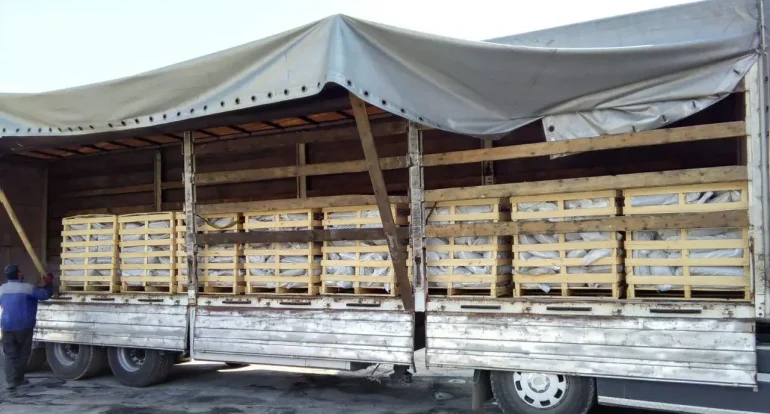
Packing options include 20 kg and 50 kg Kraft paper and polyamide bags, 25 kg carton boxes, and 150 kg, 180 kg and 200 kg steel drums. Bags can be palletised (40 bags per pallet) for easy handling at your plant. Learn more on our bitumen packaging page.
Raha Oil supplies a full range of oxidized bitumen for textile industry customers, including carpet, membrane, felt and technical-textile manufacturers, from Jebel Ali, Dubai, to buyers across the Middle East, Africa, and South and Southeast Asia.
To discuss the right grade, quantity and delivery terms for your production line, contact our sales team .
Frequently Asked Questions - FAQ
Oxidized bitumen is used to impregnate or coat technical textiles such as jute (hessian), polyester and glass-fibre mats, felts and carpet backings. It makes them waterproof, dimensionally stable and heavier. Main uses include carpet tile backing, roofing and waterproofing membranes, bituminised hessian, sound-damping felts and bituminous geotextiles.
Carpet backing usually uses harder, higher-softening grades such as 105/15 or 115/15, blended with mineral filler. These grades carry a high filler load and stay stable under foot traffic. The final choice should be confirmed through the manufacturer’s own trials.
Softer, lower-softening grades such as 75/35 or 85/40 are typically used for impregnation, because they become fluid at lower temperatures and penetrate the fibres more easily. Medium-hard grades such as 85/25 or 95/25 are common for the coating layer.
No. Oxidized bitumen is used in technical and industrial textiles such as carpet backings, membranes, felts, hessian wraps and geotextiles. It is not used for clothing, rainwear or other apparel.
Bituminised hessian is woven jute fabric impregnated or coated with bitumen. It is used for damp-proof courses, protective wrapping of pipes and cables, and moisture-resistant lining and packing materials.
Oxidized bitumen should be melted gradually with agitation and never heated above 230 °C. Overheating can release flammable vapours and change the bitumen’s properties, which affects the quality of the coated fabric.
Raha Oil supplies oxidized bitumen in 20 kg and 50 kg Kraft paper and polyamide bags, 25 kg carton boxes, and 150 kg, 180 kg and 200 kg steel drums. Bags can be palletised (40 bags per pallet) for easy handling at the plant.
Raha Oil ships from Jebel Ali, Dubai, UAE, to the Middle East, Africa, and South and Southeast Asia. Every shipment includes a Certificate of Analysis (COA), MSDS, packing list and Certificate of Origin.
Why Choose Raha Oil for Oxidized Bitumen?
Raha Oil manufactures Oxidized Bitumen from Dubai, UAE, with production and testing following ASTM standards. Quality is verified through internal testing before every shipment, with full documentation — including TDS, COA, and MSDS — provided on request.
With flexible packing — from 20 kg Kraft bags to 200 kg steel drums, including palletized options — and an established export track record across the GCC, Africa, and Asia, Raha Oil supports both trial orders and large-scale industrial supply requirements for this specialized hard grade.
Get Oxidized Bitumen Export Quote
Looking for a reliable Oxidized Bitumen supplier in UAE?
RAHA Oil provides competitive FOB and CFR export prices for Blown Asphalt with worldwide shipment support from Jebel Ali ports.
- SGS Inspection Available
- Worldwide Export Support
Contact our export team today for updated prices and shipment schedules.


