
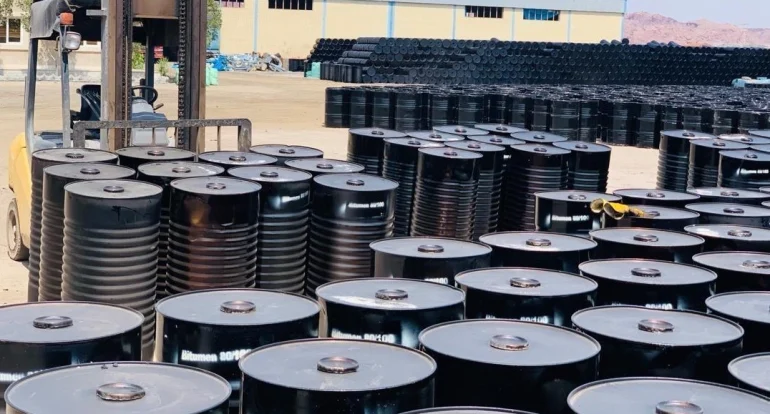
DESCRIPTION OF BITUMEN 80/100
Bitumen Penetration Grade 80/100 is a paving-grade bitumen produced to ASTM D946M, widely used in hot mix asphalt for road bases, wearing courses, and airport pavement construction. Like other penetration grades, its performance is defined by two key tests — penetration depth and softening point — rather than a single specification number.
This grade displays the same thermoplastic behavior found across the penetration series: it softens under heat and hardens as temperatures drop, a property that directly affects adhesion, rheology, durability, and the correct application temperature on site. Raha Oil produces Bitumen 80/100 from vacuum residue processed through a fully automated Biturox blowing unit, ensuring a consistent, homogeneous product batch after batch. Because it falls at the softer end of the penetration range, 80/100 is typically specified for projects in cooler climates or where added flexibility in the asphalt mix is required.
QUALITIES OF BITUMEN 80/100
RAHA Oil’s Bitumen 80/100 is a pure petroleum-grade product, refined from vacuum bottom residue through controlled air processing rather than blended fillers. Its penetration falls within 80–100 dmm, with a softening point between 42°C and 50°C — figures that place it among the softer penetration grades, giving it strong low-temperature flexibility.
Like a thermoplastic resin, it softens on heating and regains hardness on cooling, a cycle that can repeat without degrading the material’s core properties — an important factor for asphalt that must perform across seasonal temperature swings.
APPLICATION OF BITUMEN 80/100
Bitumen 80/100 is primarily selected for asphalt paving in colder climates, where its lower stiffness compared to harder grades (such as 60/70) helps prevent cracking under low-temperature stress. It’s used in hot mix asphalt for road bases and wearing courses, spray and chip-seal applications, and — in select cases — airport runway construction and high-traffic coastal roads.
This grade also serves as a base feedstock for further-processed bitumen products, including bitumen emulsions, cutback bitumen, and polymer modified bitumen.
Typical uses include:
- Road construction in cold-weather regions
- Hot mix asphalt for subbases and binder courses
- Asphalt pavements requiring added low-temperature flexibility
PRODUCTION METHODS OF BITUMEN 80/100
Production follows the same general process family as other penetration grades, adjusted to reach the 80–100 dmm target:
1. Vacuum Distillation — Crude bitumen is processed under vacuum and high heat to separate fractions by boiling point; the fraction matching 80/100 specifications is isolated for further refining.
2. Blending — Different penetration-grade bitumens are combined, sometimes with additives, to reach the target 80–100 dmm range precisely.
3. Air Blowing — Controlled air exposure oxidizes and firms the bitumen; temperature and airflow are tuned to stop the process exactly within the 80–100 dmm window.
4. Fractional Distillation — Bitumen is separated by molecular weight, and the fraction meeting 80/100 specifications is collected.
Each method carries its own trade-offs in cost, efficiency, and consistency — which is why Raha Oil monitors every batch against ASTM tolerances before release.
QUALITY GUARANTEE & SAFETY
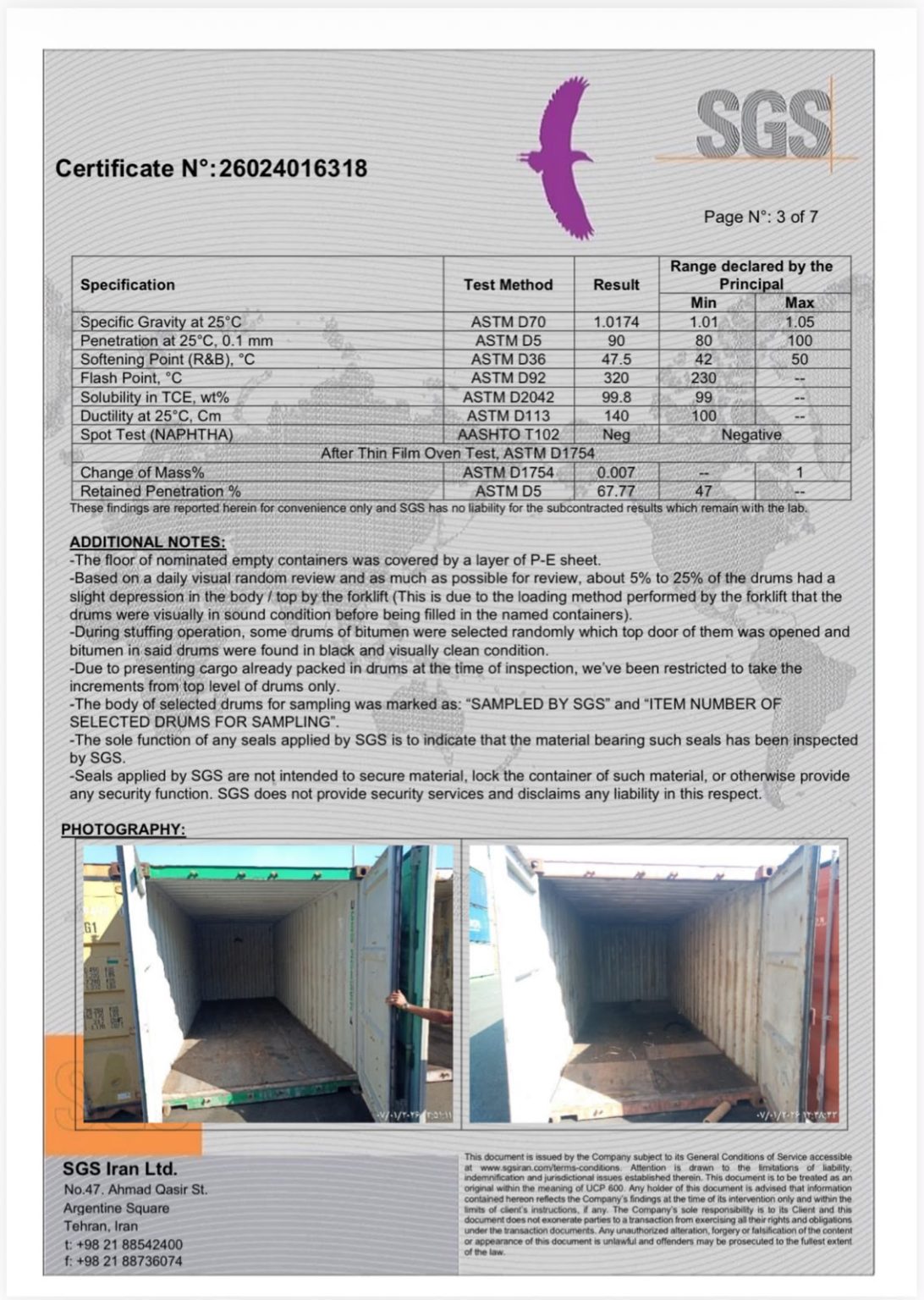
Raha Oil arranges independent international inspection at the point of vessel loading to verify both quality and quantity of every Bitumen 80/100 shipment. Internal QC issues a batch test report ahead of shipping, and all product is guaranteed to meet ASTM specifications.
THE 4 MAJOR QUALITY TESTS FOR BITUMEN 80/100
1. Penetration Test — Measures hardness by recording how far a standard needle penetrates the sample (in 0.1mm units) under fixed load and time. An 80/100 grade means results fall between 80 and 100 at standard test conditions.
2. Softening Point Test — Conducted with the Ring and Ball method, this identifies the temperature at which the bitumen softens to a defined point. A higher softening point generally means better performance in hot climates.
3. Ductility Test — Measures how far a standard bitumen briquette can stretch before breaking, expressed in centimeters — a key indicator of flexibility.
4. Viscosity Test — Measures resistance to flow at application temperature; incorrect viscosity during mixing or compaction can weaken the final paving mix.
RELATED BITUMEN PRODUCTS

Bitumen 80/100 — Technical Data Sheet
ASTM Standard| Property | Test Method | Unit | Min | Max |
|---|---|---|---|---|
| Softening Point | ASTM D36 | °C | 42 | 50 |
| Penetration at 25°C | ASTM D5 | 0.1 mm | 80 | 100 |
| Ductility, 5 cm/min | ASTM D113 | cm | 100 | – |
| Specific Gravity at 25°C | ASTM D70 | – | 1.01 | 1.06 |
| Solubility in Trichloroethylene | ASTM D2042 | % | 99 | – |
| Spot Test | AASHTO T102 | – | Negative | |
| Flash Point | ASTM D92 | °C | 230 | – |
| Thin-Film Oven Test (TFOT — ASTM D1754) | ||||
| Change of Mass | ASTM D1754 | % | – | 1 |
| Retained Penetration After TFOT | ASTM D5 | % | 47 | – |
GET BITUMEN 80/100 EXPORT QUOTE
Looking for a reliable Bitumen 80/100 supplier in UAE?
RAHA Oil provides competitive FOB and CFR export prices for Bitumen 80/100 with worldwide shipment support from Jebel Ali ports.
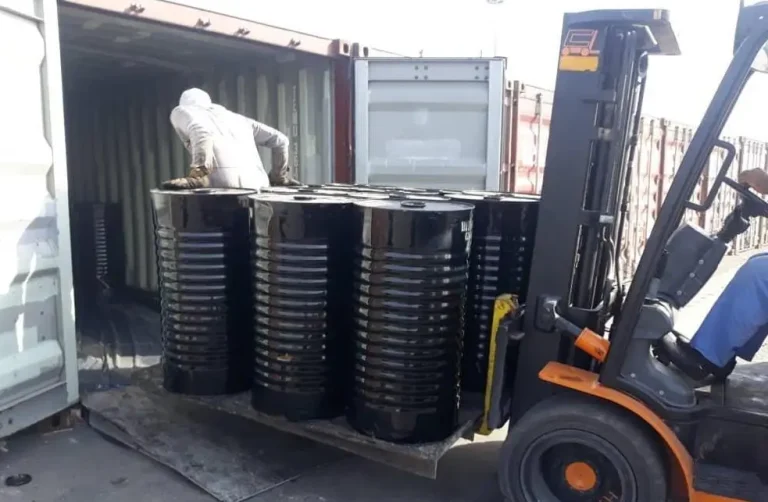
- Steel Drum Packing
- Jumbo Bag Packing
- Bitutainer Shipment
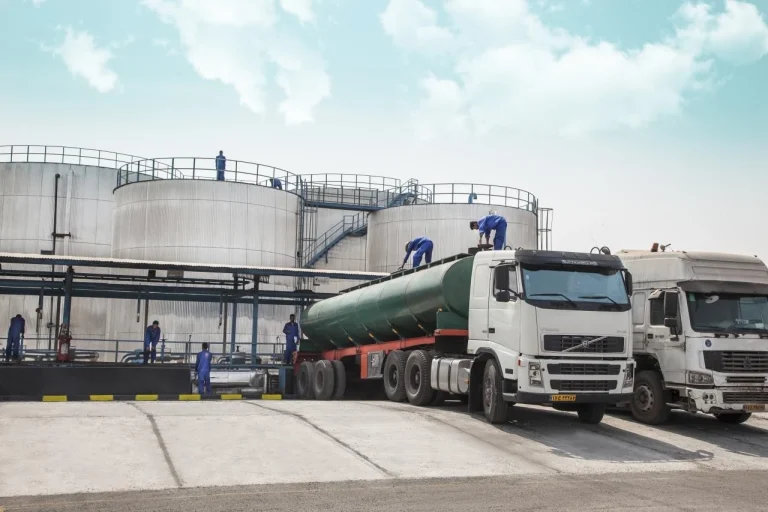
- Bulk Vessel Supply
- SGS Inspection Available
- Worldwide Export Support
Contact our export team today for updated prices and shipment schedules.


